
“The Investment Conference 2026” Hosted by Burgan Bank & Kamco Invest
Brought together thought leaders, industry experts and investors to discuss insights and strategies shaping opportunities

Burgan Bank and Kamco Invest successfully hosted the third edition of their Investment Conference under the theme “Insights & Strategies Shaping Opportunities.” The conference brought together thought leaders and industry experts, alongside institutional and high-net-worth investors from Kuwait and the wider region, to discuss critical topics spanning the global economy, geopolitical developments, and opportunities across various asset classes. The conference, which aligns with and actively supports the vision of positioning Kuwait as a regional financial and trade hub, has evolved into an annual thought leadership platform for the investment community.
Sarkhou: Kamco Invest and Burgan Bank, share a unified vision: “Where banking and investment expertise create, grow, and preserve wealth”

In his capacity as the Chief Executive Officer of Kamco Invest and the Vice Chairman of Burgan Bank, Mr. Faisal Sarkhou opened the conference with a welcome address to attendees, underscoring the event’s significance. He highlighted the conference’s role in examining the key forces shaping global and regional economies, including geopolitical and regulatory developments, technological advancements, and emerging opportunities across various sectors.
Sarkhou also highlighted the longstanding history, strong relationships, and complementary areas of expertise shared by Burgan Bank and Kamco Invest, brought together under the unified vision: “Where banking and investment expertise create, grow, and preserve wealth.” He emphasized the importance of partnerships and long-term relationships across asset management, banking, private markets, and advisory, reinforcing the belief that sustainable value is best created through collaboration and trusted partnerships.
He further welcomed the company’s partners attending the conference as delegates and speakers, with reference to PGIM, with whom Kamco Invest signed a memorandum of understanding for a strategic partnership the day prior to the conference.
Daher: Burgan Bank’s deeer integration with KAMCO Invest reflects a more thoughtful approach to private banking – one built on insight, structure, and long-term perspective.
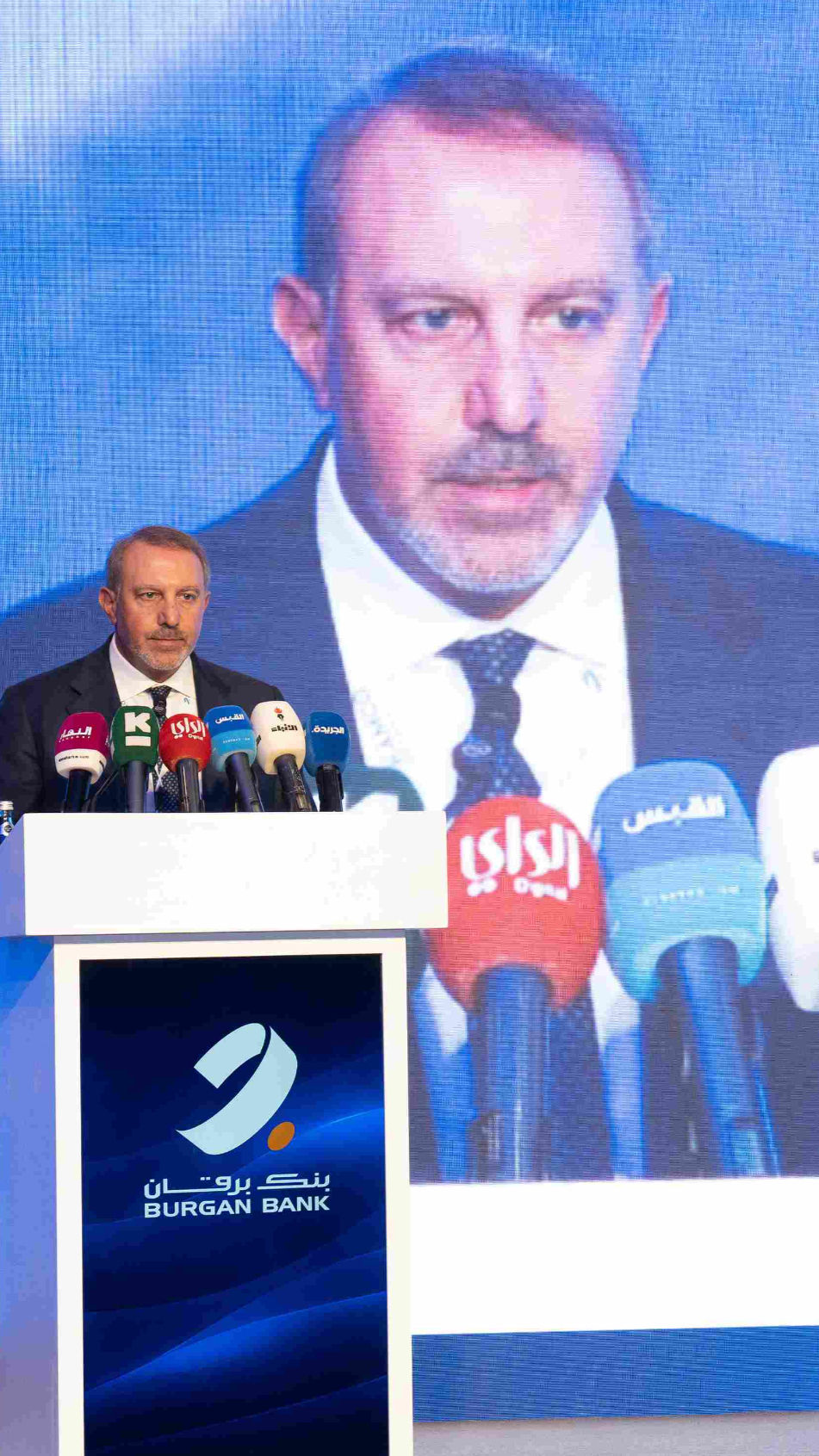
On his side, Mr. Tony Daher, Group Chief Executive Officer of Burgan Bank Group, said: “We are meeting at a time when markets are shaped by uncertainty, rapid shifts, and competing narratives. In such an environment, value is not created by noise, but by clarity. And progress is driven not by speed alone, but by deliberate assessment, disciplined planning, and collaboration. This belief sits at the heart of why Burgan Bank and KAMCO Invest continue to invest in platforms and partnerships that are built around our clients’ real needs, rather than standalone products.”
Adding: “The deeper integration between Burgan Bank and KAMCO Invest reflects that approach. By combining Burgan Bank’s financial strength and balance sheet capabilities with KAMCO Invest’s investment expertise and advisory discipline, we have created a more thoughtful private banking and wealth management model – one that enables clients to access opportunities across asset classes, geographies, and market cycles. Conferences like this are essential to that responsibility, fostering informed dialogue, strengthening the financial ecosystem, and exposing clients to the insights and perspectives required to navigate an increasingly interconnected global market.”
Cathy: Economic shifts, geopolitical realignment, and rapid technological advancement are interconnecting to create new rules, risks, and opportunities for investors.

Ms. Cathy Hepworth, Managing Director and Head of Emerging Market Debt at PGIM, provided insights into the macroeconomic and geopolitical landscape, highlighting that a profound transformation is reshaping the global landscape. Economic shifts, geopolitical realignment, and rapid technological advancement are interconnecting to create new rules, risks, and opportunities for investors.
Global growth engines are shifting. While the United States demonstrates economic resilience compared to peers like the Euro area and Japan, China remains an important player. Trade policies in the United States have meant that global trade patterns have shifted towards Asia, Africa and Europe. This reality challenges the narrative of de-globalization, suggesting a future of re-globalization, where trade patterns shift and create new opportunities for economies worldwide.
In parallel with these economic changes, a new era of acute economic competition is redefining global power dynamics. The world is moving away from an age of traditional international collaboration and into one where industrial policy and economic tools are primary instruments of national interest.

Trade tariffs and conflicts have underscored the need for nations to realign themselves, starting with economic strategies and extending to broader geopolitical relationships. Great powers are asserting their interests more formally, empowering other nations to pragmatically address their own futures and choose their alliances, creating new rules and opportunities.
Technology is accelerating these shifts. The current AI infrastructure build-out rivals historic capital booms like the railroad era. Beyond AI, advances in biotechnology, semiconductors, and quantum computing will fundamentally reshape economic potential. The race for technological leadership has become a central element of geopolitical strategy, forging alliances based on innovation advantage rather than just economics.
For investors, this complex and uncertain environment is also a landscape rich with opportunity. The macroeconomic context supports risk assets. Yields remain attractive, particularly in select emerging markets. Investors must not fear change but invest with it. Opportunities exist across public and private markets, from infrastructure and data centers to security. It will be evermore important to navigate this multifaceted world by allocating capital to the mix of assets that provides the best risk-adjusted returns. The path is not always linear and there will be fruitful opportunities along the way.
GCC’s Path to Global Investment Hub Reinforced Amid Shifting Global Order
The opening panel, “Middle East & GCC in a Shifting World: From Energy Powerhouse to Global Investment Hub,” examined how GCC economies are navigating an increasingly fragmented global landscape while reinforcing their role as stable, long-term investment destinations. The panel featured Abdoul Aziz Wane, Director of the IMF’s Regional Office; Tarik M. Yousef, Senior Fellow at the Middle East Council on Global Affairs; and Anwar Almutlaq, Vice President and Country Chairman of Shell Kuwait, and was moderated by Lara Habib, Senior Business Presenter at AlArabiya News Channel. Discussions focused on geopolitical uncertainty, evolving trade dynamics, energy market volatility, and the region’s growing role as a bridge between East and West.

The discussion highlighted the unexpected resilience of the global economy despite heightened uncertainty, trade disruptions, and policy volatility. Panelists noted that while growth and inflation have remained more stable than anticipated, this resilience may partly reflect temporary buffers that could fade over time. Against this backdrop, they emphasized the importance of sound fiscal management, credible policy frameworks, and sustained structural reforms, particularly those focused on workforce readiness, productivity, and the adoption of digital technologies and artificial intelligence.
Turning to the regional outlook, the panel underscored the relative strength of GCC economies in weathering recent global shocks. Strong domestic demand, resilient financial conditions, expanding tourism and trade flows, and limited exposure to global tariff pressures have supported economic performance. The panel also highlighted tangible progress in economic diversification, particularly in services and technology-enabled sectors, while stressing the need to deepen manufacturing capabilities, financial markets, and regional integration to support long-term growth.
Sovereign wealth funds were identified as central to the region’s long-term transformation, with strategies increasingly shifting toward global, strategic, and technology-focused investments aligned with national priorities. Panelists also reaffirmed the continued relevance of GCC exchange rate regimes in maintaining financial stability and investor confidence, even as the region’s monetary and financial systems evolve rapidly through digitalization, fintech innovation, and deeper access to international capital markets.
Structural Reforms and Market Deepening Position GCC Capital Markets for Sustained Growth
The second panel, titled “GCC Capital Markets: Insights and Strategies for a Dynamic Landscape,” brought together senior market practitioners to discuss the evolving dynamics of GCC capital markets and the strategic implications for investors. The session featured Abdullah M. AlSharekh, Managing Director of Markets & Investment Banking at Kamco Invest and Board Member of Burgan Bank; Jassim AlJubran, Head of Sell-Side Research at AlJazira Capital; and Thomas K. Mathew, Head of Buy-Side Research at Kamco Invest, and was moderated by Sarah Dashti, Vice President – Equity & Fixed Income at Kamco Invest. Discussions centered on thematic investment opportunities, sectoral trends, market liquidity, regulatory developments, and how investors can navigate risk amid ongoing global and regional uncertainty.
Panelists noted that many of the factors shaping markets in recent years, including geopolitical tensions, trade dynamics, and commodity price volatility, continue to influence investor sentiment and capital flows. However, they highlighted that GCC economies are increasingly distinguished by structural transformation, driven by diversification initiatives beyond oil, large-scale infrastructure development, technology investment, and progressive regulatory reforms. These shifts are reshaping the region’s investment landscape and creating new, long-term opportunities across multiple asset classes.
The discussion underscored the growing depth and breadth of investment opportunities across GCC public equities, spanning traditional sectors such as banking, real estate, and industrials, as well as emerging themes including technology infrastructure, data centers, and metals and minerals. Particular attention was given to reform-led infrastructure expansion in markets such as Kuwait, where project awards jumped 57% year-on-year in 2025 to USD 13.8 billion, with investments across ports, transport, real estate, and power expected to support earnings growth and attract incremental capital flows, potentially leading to increased index representation and new investment products. In 2026, investors should be cautious on petrochemicals, which face global oversupply, parts of the capital goods chain with weak order visibility, and highly competitive retail staples. Focus should remain on undervalued, growth-adjusted opportunities.
Looking ahead, panelists emphasized the rising relevance of GCC equity and debt markets within the broader emerging markets universe, supported by improving market access, deeper institutional participation, and competitive valuations. Saudi Arabia was highlighted as a key driver of this momentum, underpinned by economic resilience, a growing non-oil GDP base, landmark regulatory reforms, and increasing integration into global benchmarks. The consensus view was that the GCC’s continued market deepening, coupled with strong risk-adjusted performance and execution on long-term reform agendas, positions the region as an increasingly integral component of global and emerging market portfolios.
Asset Allocation at a Turning Point: Rethinking Diversification Amid Volatility and Fragmentation

Leading global asset managers and allocators convened for a panel discussion titled “Redefining Diversification: Asset Allocation in a High-Volatility, Multi-Polar World,” bringing together Salman Ahmed, Global Head of Macro and Strategic Asset Allocation at Fidelity International, Purnima Puri, Founding Partner and Head of Liquid Credit at HPS Investment Partners (a member of BlackRock), and Tomas Gorgulho, Chief Strategy Officer at AlTi Tiedemann Global, moderated by Faisal AlOthman, Director of Investment Advisory at Kamco Invest. The panel explored how investors should rethink portfolio construction as global markets adapt to heightened geopolitical uncertainty, shifting monetary policy regimes, and increased macroeconomic fragmentation.
Panelists observed that recent pressure on the U.S. dollar has been driven by widening fiscal deficits, persistent trade tensions, and evolving interest rate expectations. While some of the currency weakness may prove cyclical, the discussion highlighted structural forces that investors must increasingly incorporate into long-term allocation decisions. As currency volatility becomes a more material source of portfolio risk, panelists emphasized that currency exposure is transitioning from a tactical consideration to a strategic asset allocation decision, with diversification and selective hedging playing a more central role.
The discussion also focused on the growing concentration risks embedded in global portfolios. In addition to heavy allocations to U.S. assets, panelists highlighted elevated sector concentration in technology and tech-related industries, including artificial intelligence, which have been the primary drivers of equity market performance over the past five years. While these sectors have delivered exceptional returns, speakers cautioned that such concentration can amplify volatility and downside risk, reinforcing the need for broader geographic, sector, and style diversification without materially compromising return potential.
Fixed income emerged as a renewed cornerstone of diversified portfolios. After a prolonged period of underperformance, high-quality sovereign bonds are once again viewed as effective tools for income generation, capital preservation, and downside protection, particularly in an environment of slowing growth and heightened geopolitical risk. Panelists noted that elevated yields have restored the defensive characteristics of fixed income, reaffirming its role as a strategic allocation rather than a short-term tactical trade.
Turning to alternatives, the panel examined the rapid expansion of private credit and questioned whether parts of the asset class are becoming increasingly crowded. While attractive opportunities remain in select segments, speakers stressed the importance of disciplined underwriting, careful manager selection, and realistic return expectations. More broadly, alternatives were positioned as an important diversification tool that must be balanced against liquidity considerations, especially during periods of market stress when flexibility and access to capital are paramount.
The panel concluded that effective diversification in today’s high-volatility, multi-polar world requires a more nuanced and forward-looking approach; one that actively manages concentration, currency, and liquidity risks while combining traditional assets with carefully selected alternative strategies to build resilient, long-term portfolios.
Tech Investing at an Inflection Point: AI, Liquidity Shifts, and the Next Wave of Value Creation
The closing panel examined the evolving dynamics shaping the global technology sector and the sustainability of investment flows across venture capital and private markets. The discussion brought together leading US-based technology investors, including Jake Zeller, Founder of Powerset, Patrick Yang, General Partner at Amity Ventures, and Omar Darwazah, Managing Director, General Partner & CFO at AAF Management Ltd. The session was moderated by Fahad AlSharekh, Vice Chairman of Kamco Invest – Saudi and Chief Executive Officer of TechInvest.
Looking ahead to 2026, panelists highlighted a potentially transformative phase for capital markets, driven by the anticipated public listings of major technology platforms such as SpaceX, Stripe, Anthropic, and OpenAI. These expected IPOs were described as a turning point for the innovation ecosystem, signaling a shift in how liquidity, valuations, and capital allocation may evolve across both public and private markets. The discussion emphasized that value creation is becoming increasingly concentrated around frontier technologies and mission-driven companies with scalable, defensible business models.
A central theme of the panel was the expanding role of artificial intelligence beyond productivity and creative use cases, particularly its growing influence on fund formation, deployment strategies, and investment decision-making. With AI-enabled tools now capable of analyzing vast datasets and identifying early market signals, panelists explored how investors must adapt their approaches to maintain a competitive edge. The conversation focused on the balance between human judgment and algorithmic intelligence, and how AI-driven insights are reshaping the future of venture investing.
From the perspective of The JEDI Fund, the discussion reflected on the fund’s evolution following years of building an emerging manager ecosystem. The focus is now shifting toward selectively pursuing direct investment opportunities that demonstrate strong signal quality and strategic alignment. Panelists discussed the importance of constructing a high-conviction, curated investment pipeline that combines institutional rigor with entrepreneurial agility, in line with Kamco Invest’s broader investment objectives.
The session concluded with reflections on lessons learned from the previous fund cycle, particularly the structural and operational challenges faced by fund managers. Panelists emphasized the need for next-generation funds to be more scalable, transparent, and efficient, leveraging data-driven processes to enhance execution speed and resilience. These insights were positioned as critical foundations for navigating an increasingly complex and fast-moving investment environment.
Burgan Bank and Kamco Invest expressed their appreciation to all speakers and attendees whose participation contributed to the conference’s strong engagement and successful turnout. In a joint statement, the two institutions noted that The Investment Conference 2026 represents the third edition of their annual flagship event, held in support of Kuwait’s vision to become a globally recognized financial hub. The conference also serves as a platform for the exchange of market insights, geopolitical perspectives, and in-depth discussions on investment opportunities across a broad range of asset classes.


